As the part of the Bayeux Tapestry national programme in partnership with the British Museum, Bayeux Around Britain, a series of eleventh-century coins from Lincoln Museum’s collection that were struck at the Lincoln mint, have gone on display in the Magna Carta Vault at Lincoln Castle.
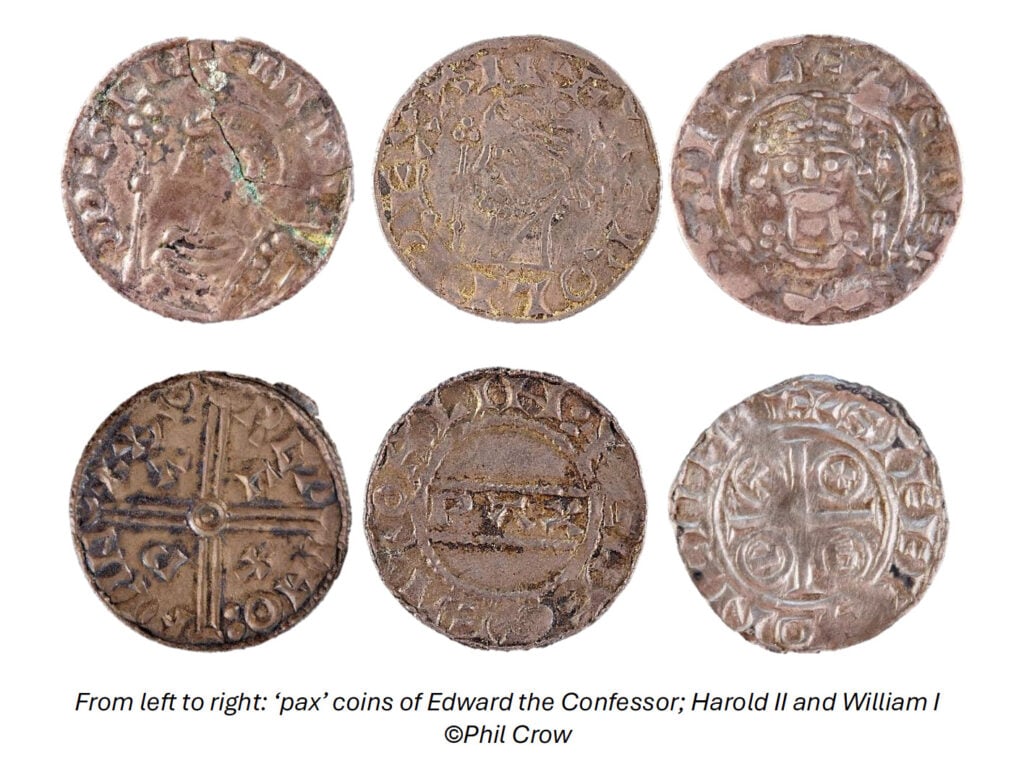
In AD 1066 there was only one coin denomination, the silver penny. Without newspapers, television or social media to disseminate images of the king, coins were the mass media of their day. The imagery on coins, therefore, was carefully chosen to portray rulers in a certain way, perhaps as a majestic Roman emperor, or as a previous Anglo-Saxon king to show you were a legitimate successor to the throne. 1066 was an extraordinary year with three different individuals ruling as king of England: Edward the Confessor, Harold Il and William I.
Edward the Confessor reigned for almost 24 years (8 June 1042 – 5 January 1066). He issued eight different coin-types across his reign. Harold II (Harald Godwinson) reigned from 6 January 1066 until his death a few months later at the Battle of Hastings on 14 October 1066. Harold only issued one coin-type. William | (William the Conqueror) held his coronation on 25 December 1066 and reigned as king of England and duke of Normandy until his death on 9 September 1087. William also issued eight different coin-types across his almost 11-year reign.
All three kings issued a coin-type with a variation of the Latin for peace, pax, a word commonly found on Roman coins. It was the first coin-type of Edward the Confessor, the first, and only, coin-type of Harold Il, and the final coin-type of William I. The obverse (heads) designs of Edward and Harold are similar with a left-facing bust and sceptre, whilst the reverse (tails) designs of Edward and William are similar with the ‘pax’ inscription. Although the Norman Conquest of 1066 was a period of huge political upheaval, the coinage shows remarkable continuity.
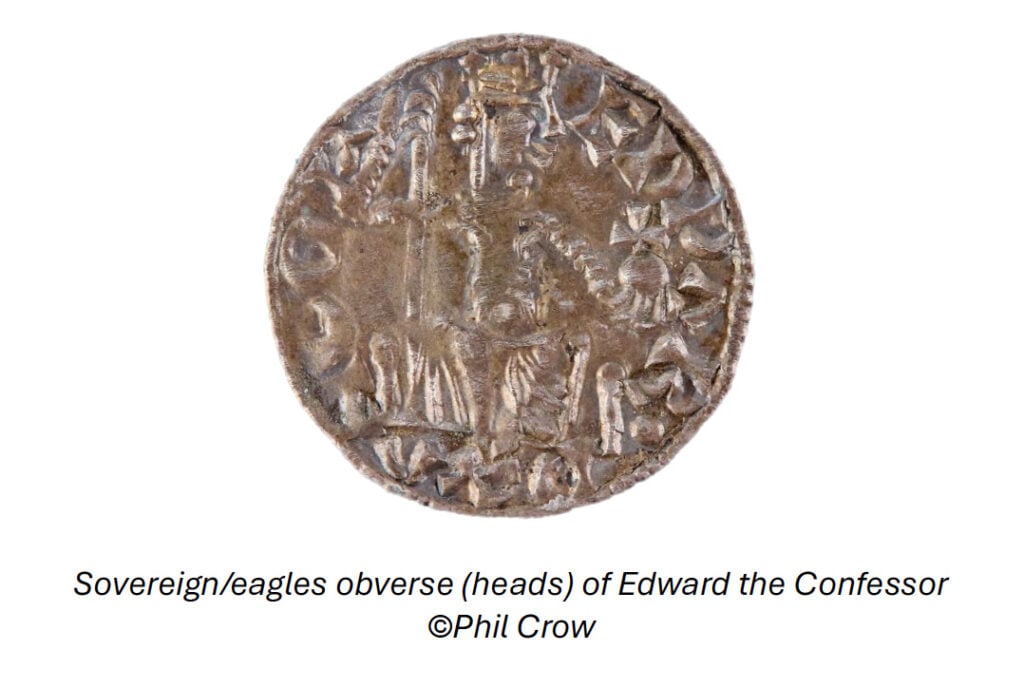
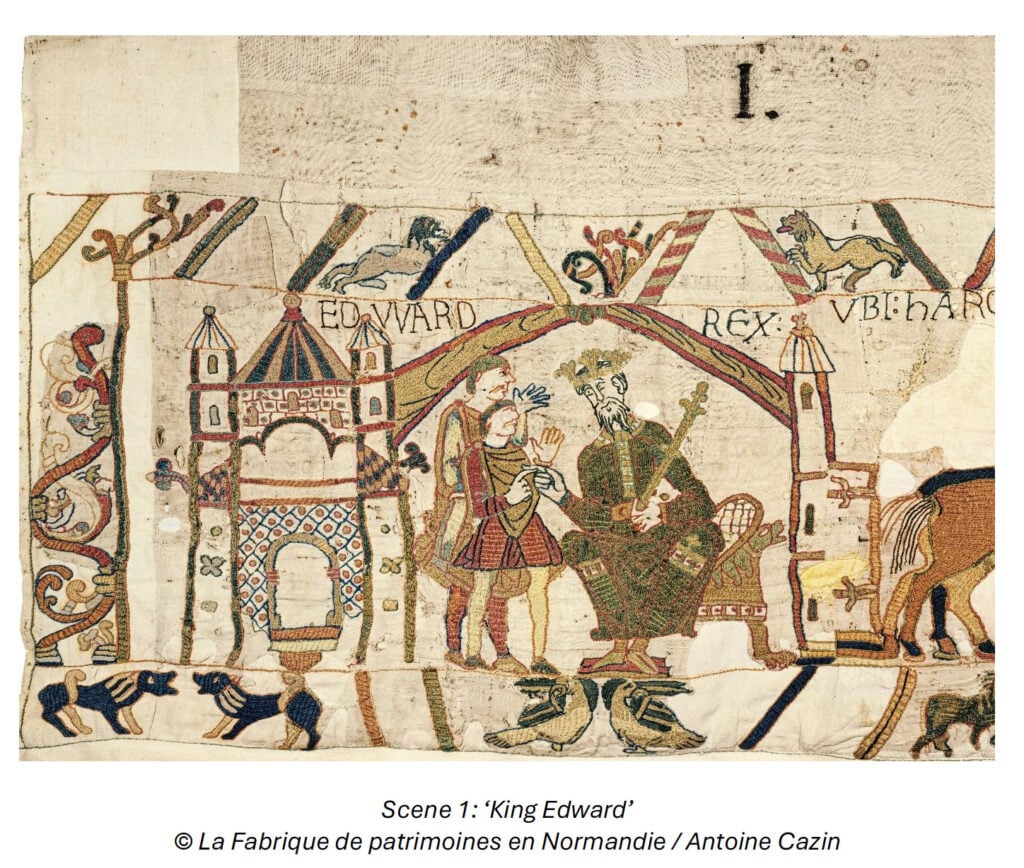
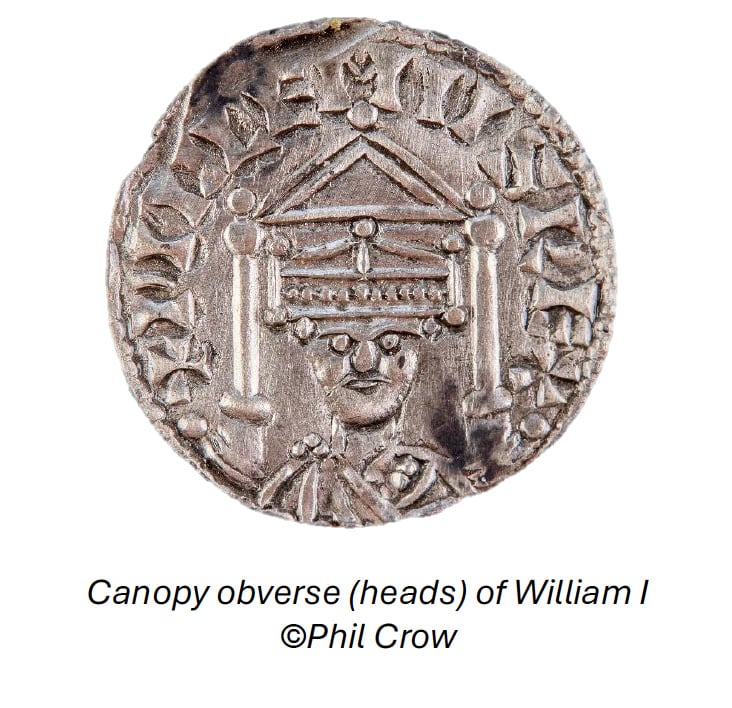
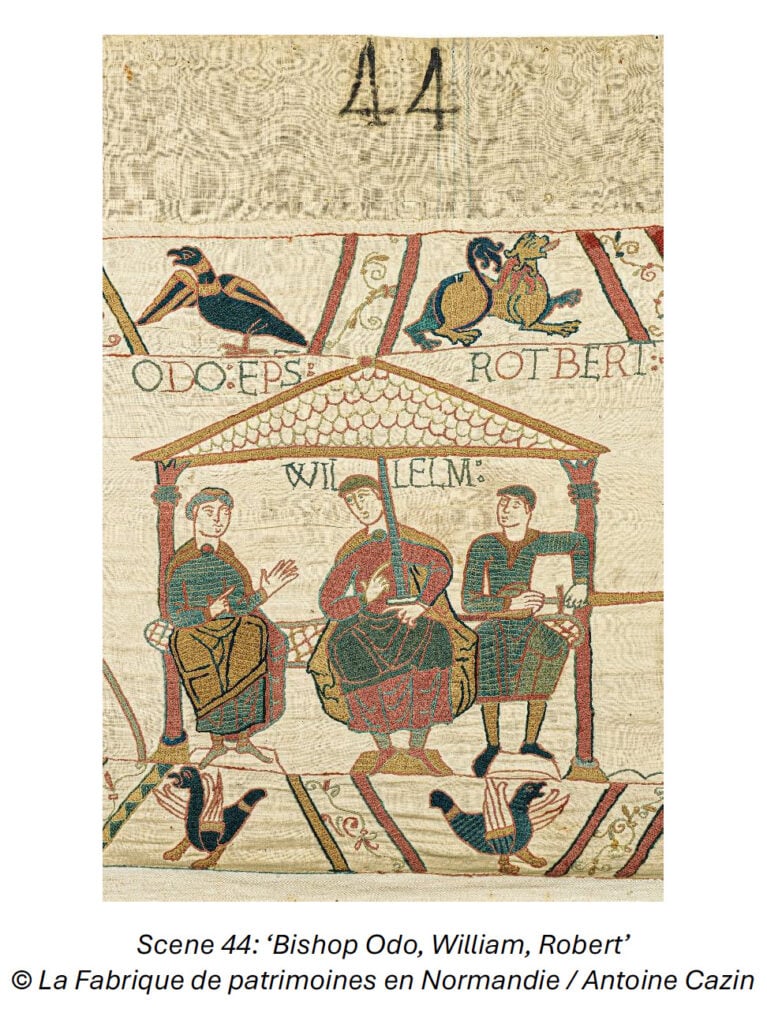
Both the Bayeux Tapestry and the images on contemporary coins provide pictorial representations of the three men who reigned as kings of England in 1066, Edward the Confessor, Harold II (Godwinson) and William I (the Conqueror). There are similarities between scenes depicted on the Bayeux Tapestry and the coins issued by Edward the Confessor and William I. The obverse of the Sovereign/Eagles type of King Edward has him seated on the throne, as he is in the opening scene of the Bayeux Tapestry (Scene 1, ‘King Edward’). William’s coronation was probably the final scene of the now lost ending of the Bayeux Tapestry. However, his third ‘canopy’ coin-type, features the king in a building that is similar to a few scenes in the Tapestry such as Scene 44 (‘Bishop Odo, William, Robert’).
These coins can be seen on display in the Magna Carta Vault at Lincoln Castle until March 2027.
Check out our Norman Connections blog to find out more about Lincolnshire’s Norman heritage.