Did you know this?
American connections to Lincolnshire
Did you Know?
There are many connections between the United States of America and Lincolnshire, from explorers and those searching for religious freedom to troops in World War II waiting for D Day. In 2030 it will be the 400th anniversary of the founding of Boston, Massachusetts, many of those founders being from Boston, Lincolnshire and who made this most intrepid of journeys. Time to celebrate our links!
Captain John Smith
Modern America took root on the banks of the James River at Jamestown, Virginia, in 1607, a decade before the Mayflower Pilgrims set sail. And it was Lincolnshire soldier-of-fortune Captain John Smith who played a leading role in the journey of discovery that led to the New World.
It all started with three small wooden ships and 105 hardy souls setting sail into the unknown. After four months battling the Atlantic Ocean these pioneers landed on the swampy shores of picturesque New England.
While John Smith will forever be linked with the story of Pocahontas, his story began in the Lincolnshire village of Willoughby, near Alford where he was born and christened – with that same font in the church still remaining today – and ended with him becoming President of Virginia. A window in St Helena’s Church commemorates his exploits. He went to school in Alford and later Louth, before leaving home at 15 to seek adventure. By 1606, when he joined a group sailing from England to establish a colony in Virginia, he was an experienced soldier. John’s skills weren’t entirely appreciated, and he arrived in the New World in irons – his helpful suggestions didn’t go down well in an age when deference was all. But life in Jamestown was tough with disease, starvation and Indian attacks. John Smith took over as president of the colony in 1608, enforced order, made everyone work and traded with the Indians for food. He was a good publicist and the colourful story of his rescue by Pocahontas, an Indian chief’s daughter, who married another settler Captain John Rolfe, is now folk history.
Mayflower Pilgrims
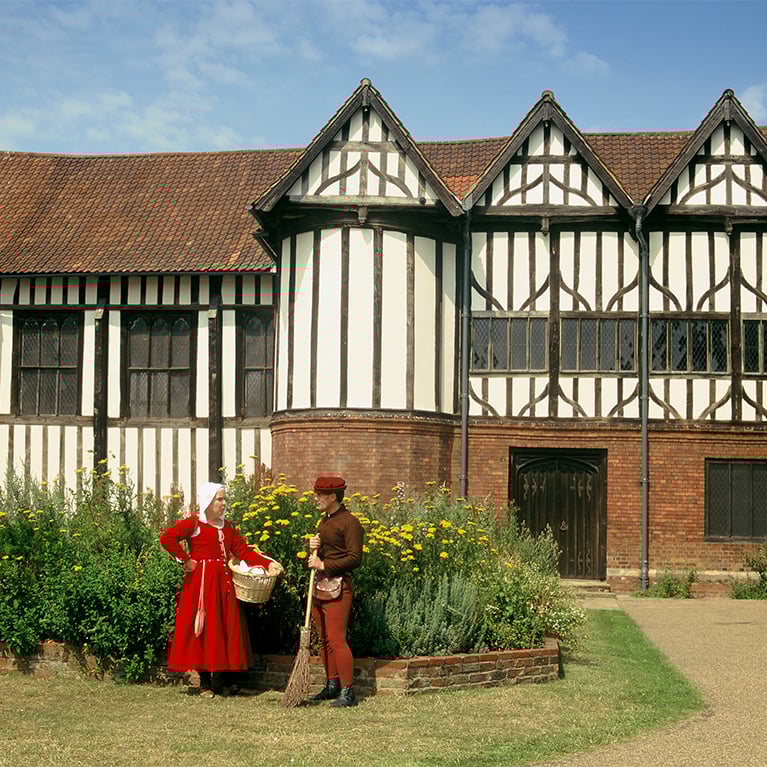
A corner of England in Lincolnshire, Nottinghamshire and South Yorkshire is where the villages can be found where the Pilgrims’ congregation originated. They were seeking religious freedom and separation from the Church of England, which led them to be called Separatists. In the early 1600’s Gainsborough thrived as a hotbed of religious dissent, attracting the local Separatists led by influential figures like John Robinson and William Brewster. Risking arrest if caught, they worshipped in secret at Gainsborough Old Hall, a medieval manor house in the centre of the town.
Their desire to establish a new colony in the New World was long and they made several attempts to escape. In 1607 this determined group, having travelled 60 miles from Scrooby near Gainsborough, met a ship, which was to take them to the Netherlands, on the edge of The Wash at Scotia Creek, Fishtoft, near Boston. The captain of the ship betrayed them and the soldiers seized their money and possessions and they were imprisoned in cells at the Guildhall. The Privy Council in London was informed and ordered them to be sent back ‘from whence they came’.
In May 1608, the Separatists tried again to escape England. They arranged with a Dutch captain to take them to Holland. Some of the Separatists left from Gainsborough on a barge from Hull, while others travelled by foot. The two groups met on the coastline near Immingham.
The ship arrived. Some of the men were taken on board, while the women and children waited in a boat near the shore. To their alarm, an armed troop were spotted approaching on the shoreline. The Dutch captain decided to sail away rather than face arrest. The women were left, distraught at being separated from their husbands.
Those who made it onto the ship had a treacherous voyage. The ship became caught in a storm and was blown off the coast of Norway before eventually arriving in Amsterdam. The few men left behind with the women were arrested and questioned. The authorities though didn’t know what to do with them. It is thought the Pilgrims took shelter in the porch of St Andrew’s Church in Immingham. Rather than become a burden on the local authorities, it seems they were eventually allowed to slip away. By August 1608, they had joined the others in Amsterdam, but no records show how they made their way across.
There is a memorial in Immingham erected in 1924 by the Anglo-American Society, it is made from granite taken from Plymouth Rock, Massachusetts. There is also a Pilgrim Trail which starts at Immingham Museum.
In 1620 they decided to leave for the New World. They had two ships, but the Speedwell had to be abandoned and the Mayflower sailed on alone. After a dangerous 10 weeks at sea with limited supplies and the uncertainty of an unfamiliar land, they arrived on the 20 November 1620.
The Mayflower pilgrims were vastly ill-prepared for the harsh conditions. They endured a fierce winter and referred to the ordeal as ‘the Starving Time’. Those who survived would certainly have perished but for the help of a Native American, Squanto of the Wampanoag tribe, who taught them to grow maize and where to hunt and fish.
Gainsborough Old Hall is run by English Heritage and is open to the public. This medieval manor house dates from 1460. Superb timber framing and brickwork, highlights include the magnificent Great Hall, the domestic apartments and the finest medieval kitchen complex anywhere in England.
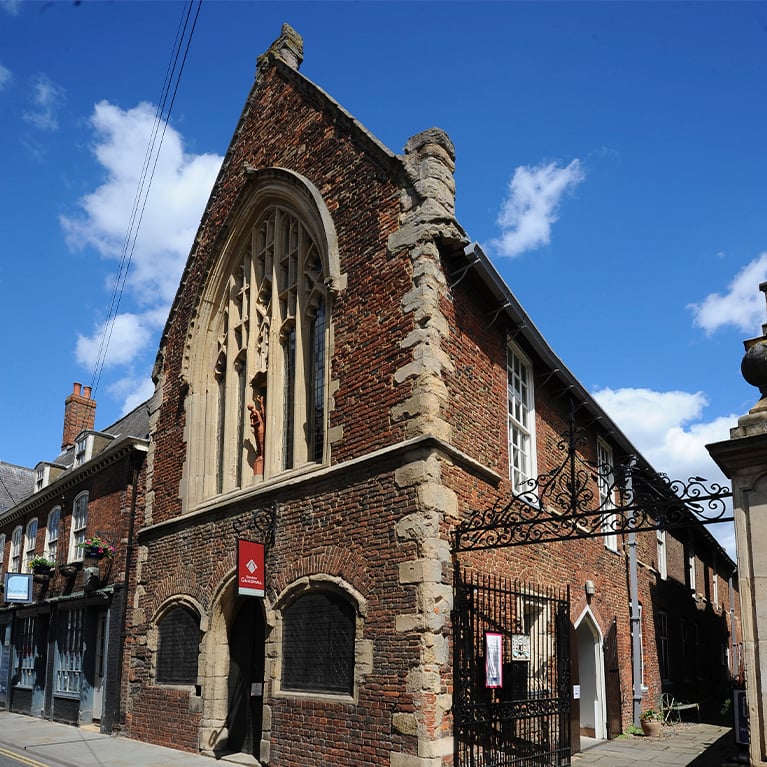
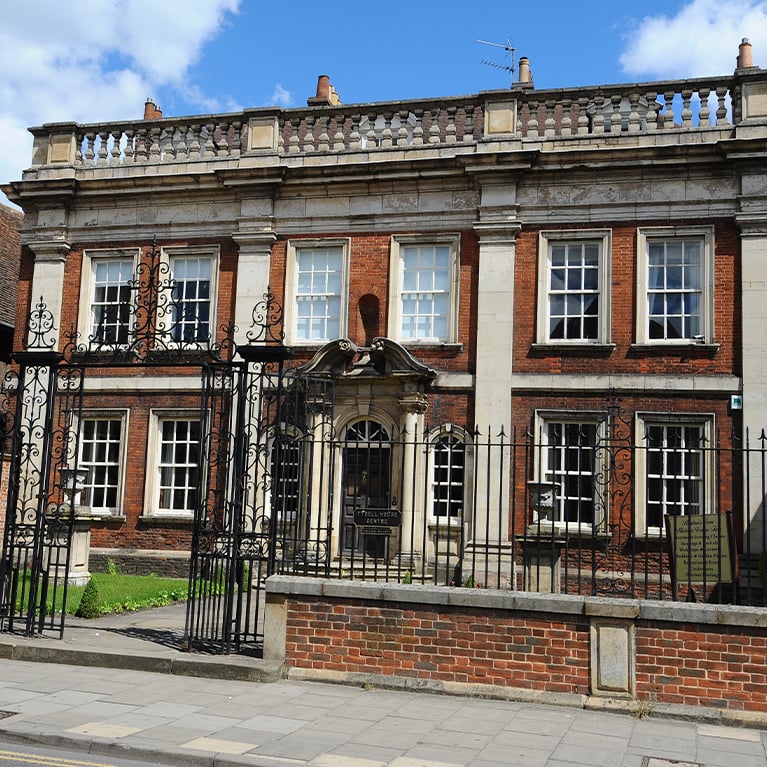
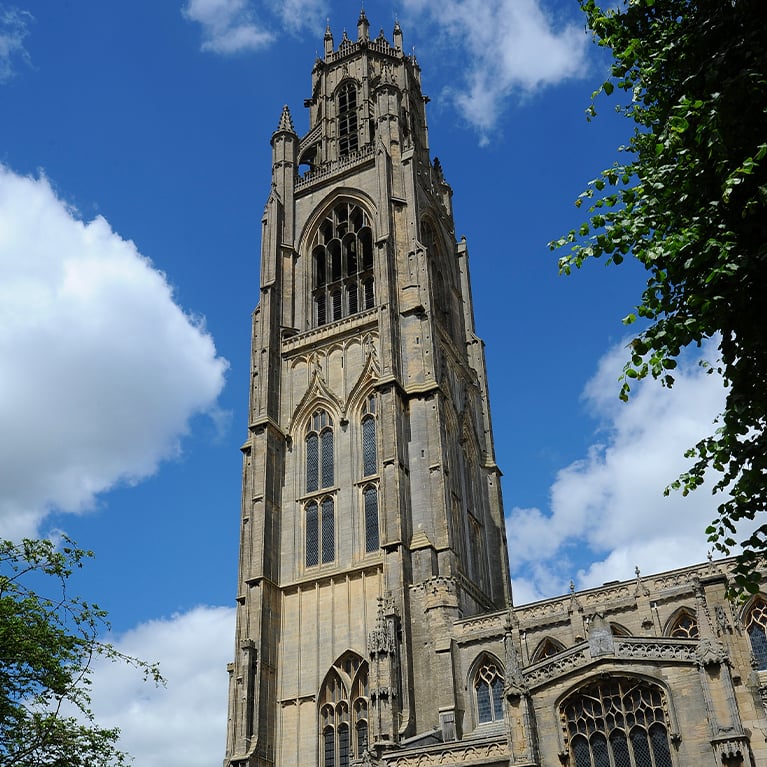
There are a number of historic sites in Boston that add to the story. St Botolph church where John Cotton was vicar. Boston Guildhall built in the 1390’s is a fascinating museum where you can view the courtroom where the pilgrims were tried in 1607 and the cells where they were imprisoned. There is a Pilgrim Monument on The Haven, marking the spot where they tried to escape. Next door to the Guildhall is Fydell House, a grand merchant’s house of the Queen Anne period, it contains an American Room which was dedicated by US Ambassador Joseph Kennedy in 1938.
The Founding of Boston, Massachusetts
2030 will see the 400th anniversary of the founding of Boston, Massachusetts. In 1630 a fleet of 11 ships arrived in America. Its flagship the Arbella was named after the Earl of Lincoln’s sister Lady Arabella. Trimountaine as it was originally known was renamed Boston, after the Lincolnshire town that many of them had left. Five of the Boston colonists served as governors of Massachusetts during its formative years and there are memorials to them in St Botolph’s, Boston, Lincolnshire.
John Cotton, vicar of Boston travelled to Southampton to see off the flotilla and he too eventually made it to Massachusetts. 166 or more from the Boston area in Lincolnshire left for a new life in America. The pulpit was installed in St Botolph’s in 1612 and is named after the Rev John Cotton, who regularly preached from it while he was vicar at the church.
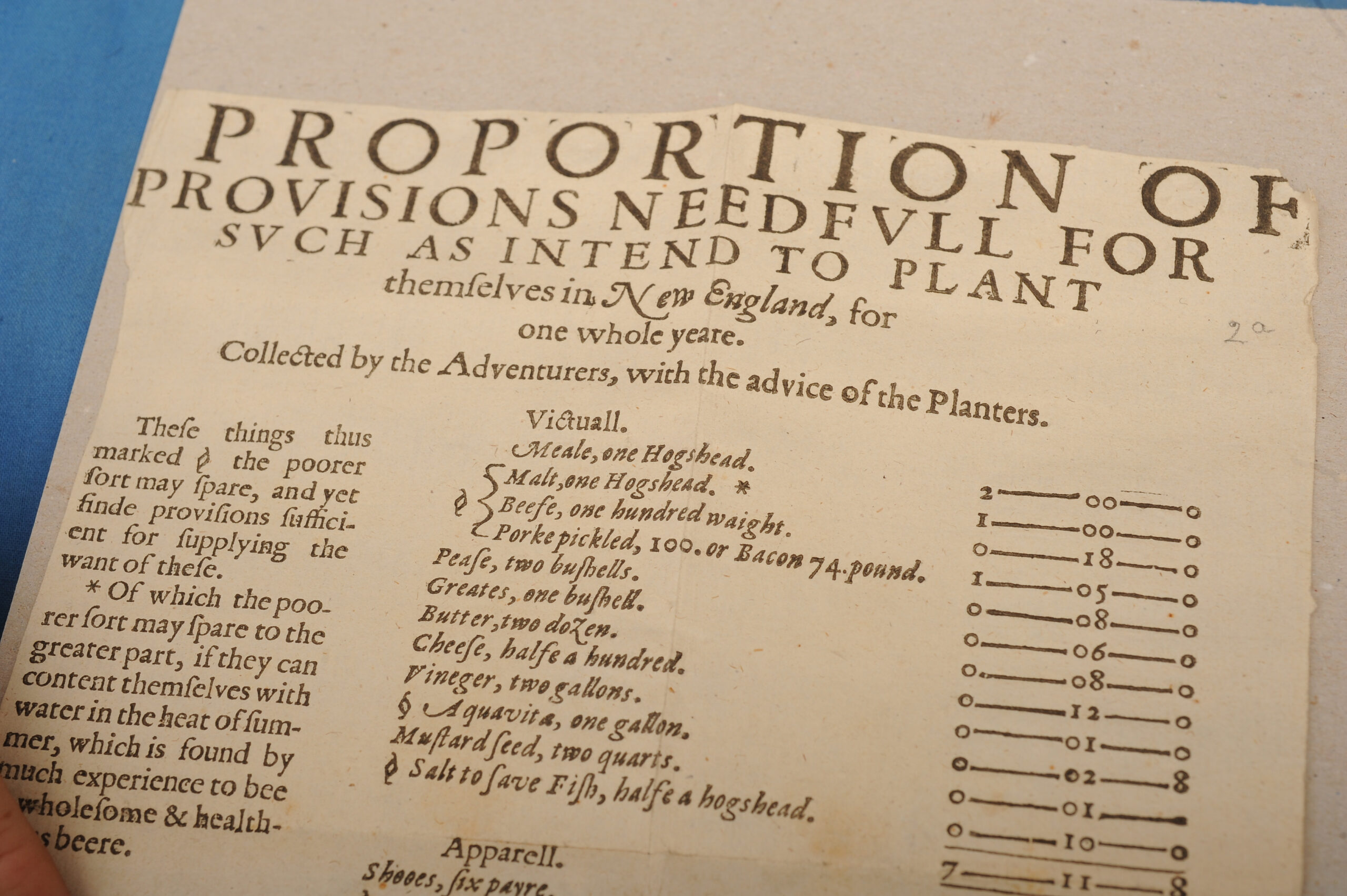
Learning from the mistakes of the Mayflower Pilgrims ten years earlier these new settlers crammed the hold with enough salted beef, bacon and cheese to sustain them during their first year. There was no room for luxuries, only space for livestock and essentials such as nails and axes to build their new homesteads. Surviving in Lincoln Cathedral’s Wren Library is a document listing the provisions taken aboard the Arbella.
The ships, carrying 700 passengers between them, had been chartered by the Massachusetts Bay Company. The company had been granted a charter by King Charles I empowering it to colonize land and establish trade. But the real intention of the company’s members was to establish a Puritan community in the New World. To this end they recruited mainly middle class, educated Puritan families and skilled craftsmen to join the expedition. John Winthrop was chosen as their leader and sailed aboard the Arbella.
John Winthrop’s Diary Entries:
“Our children and others, that were sick, and lay groaning in the cabins, we fetched out, and having stretched a rope from the steerage to the mainmast, we made them stand some on one side and some on the other, and sway it up and down till they were warm, and by this means they soon grew well and merry.”
“We put our ship a-stays, and took, in less than two hours, with a few hooks, sixty-seven codfish, most of them very great fish, some a yard and a half long…”
“…about three in the afternoon…we had sight of land…We had now fair sunshine weather, and so pleasant a sweet air as did much refresh us, and there came a smell off the shore like the smell of a garden.”
The Puritans chose the name Boston for their new settlement in Massachusetts, after the hometown in Lincolnshire of many of the settlers. Life was a struggle as they carved farms out of the cold landscape of New England, and the death rate was high. Nonetheless over the next ten years a steady flow of Puritan settlers made their way across the Atlantic, so many that it became known as the ‘Great Migration’.
Anne Hutchinson
Anne Hutchinson was born in Alford in 1591. She first came to Boston to hear the Rev John Cotton preach in her early twenties. Admired for her biblical teaching and her midwifery skills, she became part of Cotton’s inner circle. In 1634, with her large family, she followed Cotton to Massachusetts joining his congregation and running Scripture meetings in her home. These attracted large numbers of those eager for social reform but others felt threatened by her growing influence. In 1637 she was put on trial for heresy and sedition by governor John Winthrop, Anne defended herself brilliantly by using Scripture to support her right to preach. Cotton who had defended her rights, abandoned her to save himself when he realised she would be convicted. Anne and her family were exiled and moved to Rhode Island, creating a settlement dedicated to freedom of worship and speech.
Alford is a small, picturesque market town at the foot of the Lincolnshire Wolds and just seven miles from the coast. It has a working windmill and many thatched houses. Built in 1611 Alford Manor House is reputed to be the largest thatched manor house in the country.
John and Charles Wesley
Born in Lincolnshire and living in the little town of Epworth where their father Samuel was the rector. Both John and Charles were ordained, but their activities of study, prayer, prison visiting and fellowship, led bemused observers to describe it as 'Methodist' because they went about their lives so methodically. They visited America and witnessed the cruelties of slavery and began a lifelong passionate disapproval of it. John Wesley's last letter, days before he died in 1791, was written to William Wilberforce, in which he urged the young MP to continue with his efforts to banish 'the execrable villainy' of slavery. In the course of his ministry John Wesley is said to have travelled on horseback some 250,000 miles, around 5,000 miles a year. In 1742, long after his family had left Lincolnshire, John Wesley entered Epworth on a preaching tour. The rector refused him entry to the church, so he jumped onto his father's tomb in the graveyard and began to preach, a large crowd soon gathering. Charles Wesley died in 1788, the 'sweet singer of Methodism' had written an armoury of hymns, including 'Love Divine, All Loves Excelling' sung at many a wedding to this day.
The pretty historic town of Epworth is literally the ‘birthplace of Methodism’. The area is known as the Isle of Axholme, each town or village being built on areas of higher ground in the surrounding marshland. The area was drained in the 17th century despite violent opposition from the local population. St Andrew’s, Epworth can be visited and there is the font where the Wesley children were baptised. The Old Rectory is maintained as a museum and the Wesley Methodist Memorial Church is set in beautiful gardens.
Magna Carta
Only four of the original 1215 charters survive and one of them is held securely at Lincoln Castle. Sealed by King John at Runnymede, Magna Carta was to secure a truce in a civil war, its limitation of the king’s power was radical. The law was to be supreme and the king himself was not above the law.
Over 800 years later several clauses still have resonance for our civil liberties. ‘To no one will we sell, to no one deny or delay right or justice’.
Lincoln’s Magna Carta is kept in a purpose built vault at the castle with exacting security and environmental conditions. It spent World War II in the United States in the very secure Fort Knox.
Lincoln Castle was built by William the Conqueror in 1068 and was subject to an extensive restoration 2005-15. There is a complete medieval wall walk, a Victorian prison and of course, the vault containing Magna Carta.
D-Day
Lincolnshire was involved in the 1944 military milestones of both D-Day in June 1944 and Operation Market Garden (Arnhem) in September 1944. Soldiers from Poland and the US trained for action here and departed from local airfields. There is much still to see: the country houses like Harlaxton Manor, Stoke Rochford Hall and Easton Hall where they were billeted, Stamford where the Poles were based, the pubs they relaxed in and the airfields they flew from. Harlaxton Manor also continues the area’s American connection today, as Harlaxton College is owned and operated by the University of Evansville in the United States.
Launched from Lincolnshire, American pathfinder troops from RAF North Witham were dropped behind enemy lines on the eve of D-Day to set markers for the incoming invasion.
Operation Market Garden, was the largest airborne invasion in military history and the plans for it were made in the little village of Fulbeck. The video Soldiers from the Sky commemorates those who fought at the D Day landings and at Arnhem. During the Second World War, before the invasion of Europe could take place there was another ‘invasion’ - at Grantham – 30,000 fit, tall, suntanned and well-fed United States servicemen were based around a war-weary and hungry town of 15,000. There were six American Air Force bases around Grantham and the servicemen certainly made their presence felt in the town’s pubs – all 92 of them. Two-thirds of their food was bought locally, but canned fruit, meat, peanut butter, eggs and ice cream were imported from the United States. Some of this was allocated as ‘hospitality rations’ to the local community – the luxury of tinned peaches and pineapple not seen for years.
Described as the finest steeple in England, St Wulfram towers over the historic town of Grantham. Belton House, Belvoir Castle and Woolsthorpe Manor are all close by.
Memorials
The International Bomber Command Centre at Lincoln commemorates the nearly 58,000 men and women from 62 nations who lost their lives supporting Bomber Command in World War II. The 31m tall spire is in direct sight of Lincoln Cathedral which provided an important landmark for crews both leaving and returning from missions. There is an Airmen’s Chapel in the cathedral.
A much smaller memorial is in the graveyard of the pretty village of Scopwick. High Flight, a poem loved by aviators, was written by Anglo-American 19 year old John Gillespie Magee, a wartime Spitfire pilot with the Royal Canadian Air Force. He was killed in 1941 when his plane collided in mid-air over Lincolnshire. The poem High Flight, written on the back of an envelope, was sent home to his parents weeks before the crash. “Oh! I have slipped the surly bonds of earth”, the poem’s first line was quoted by President Ronald Reagan after the Challenger disaster.
Ancestral Tourism
Many people visit Lincolnshire to research their history. The Lincolnshire Archives is one of the best in the country and their staff can help you start your search. Their video is a helpful starter.